
Monday–Friday: 10AM–5PM
245 Lombard Street, Thousand Oaks
Bruxism — commonly known as teeth grinding or jaw clenching—affects millions worldwide. It can happen during the day or at night while you sleep, often without you even realizing it. Left untreated, bruxism can wear down teeth, cause jaw pain, and disrupt sleep.
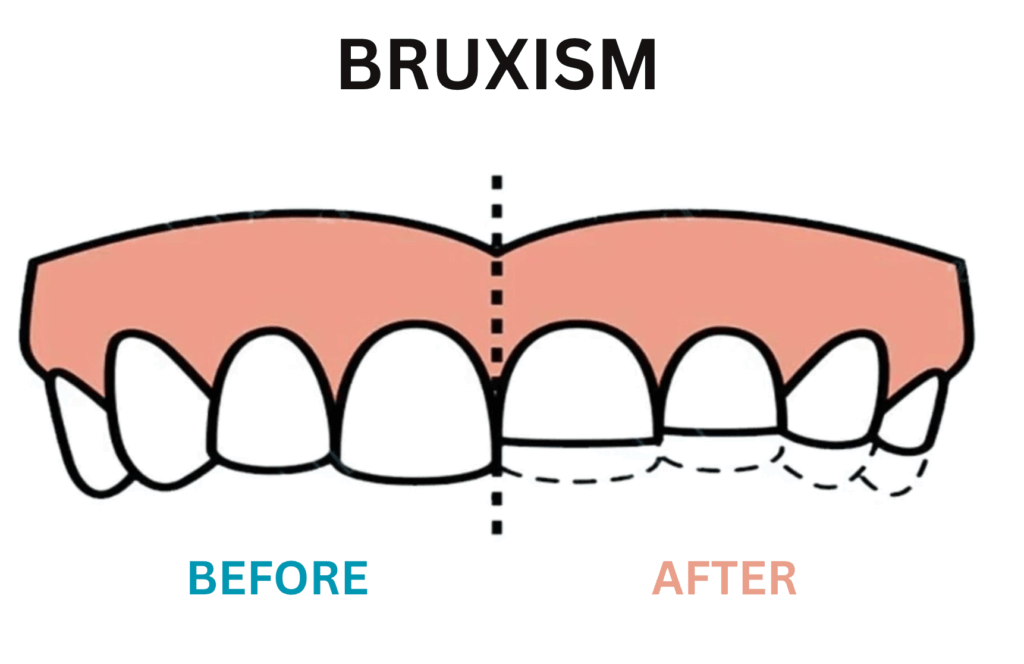
A recent systematic review and meta-analysis (2003–2023) estimated that the global prevalence of bruxism is 22.22%. Breaking that down:
That means nearly 1 in 4 people may grind or clench their teeth—making it one of the most widespread but often overlooked dental conditions.
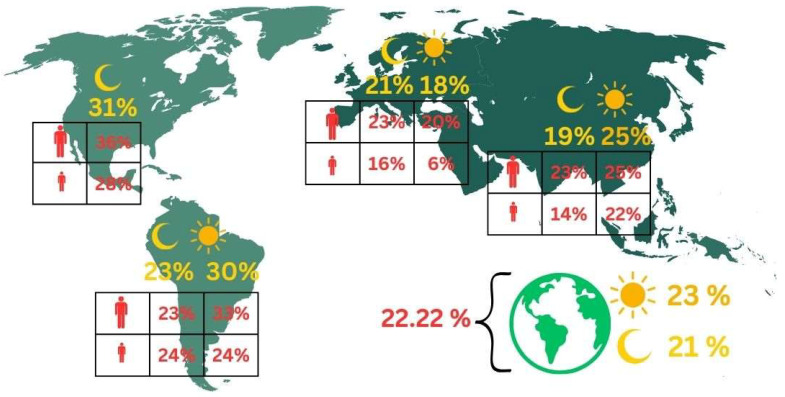
Graphical representation of the obtained results on the occurrence of bruxism in the population.
Studies show that bruxism is more common in women than in men. The global prevalence of sleep bruxism in females is about 11.7%, with adult women showing higher rates (14.5%) compared to minors (8.9%). This means adult women are almost twice as likely to grind their teeth at night as younger females. These findings confirm that both gender and age strongly influence who develops bruxism, with women—especially adult women—facing a greater risk.
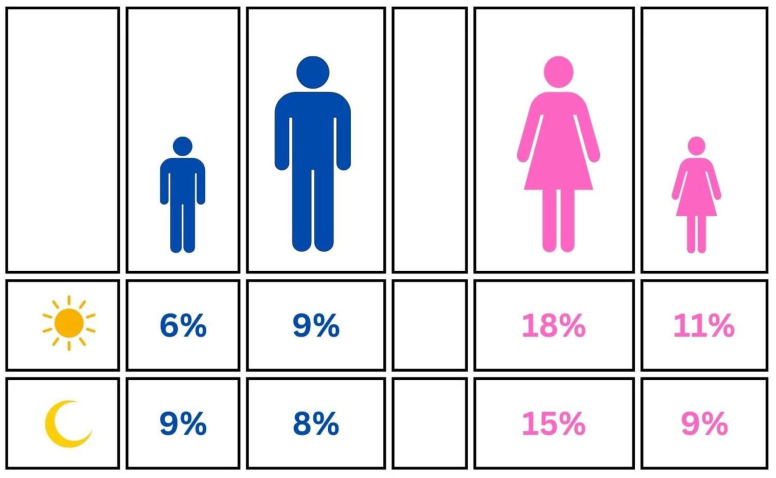
Graphical representation of the prevalence among males and females.
You may be experiencing bruxism if you notice:
Since these symptoms can overlap with other dental or medical conditions, it’s important to get evaluated by a dentist.
Bruxism can stem from multiple factors, including:
Interestingly, research shows bruxism is more common in women and may increase with age in female populations.
Since teeth grinding often occurs during sleep, many people are unaware until symptoms become severe. Dentists look for worn enamel, cracked teeth, or jaw tenderness. In complex cases, a sleep study (polysomnography) may confirm nighttime bruxism.
Managing stress is often the first step in reducing bruxism. Helpful strategies include:
These changes, combined with dental guidance, can reduce grinding severity.
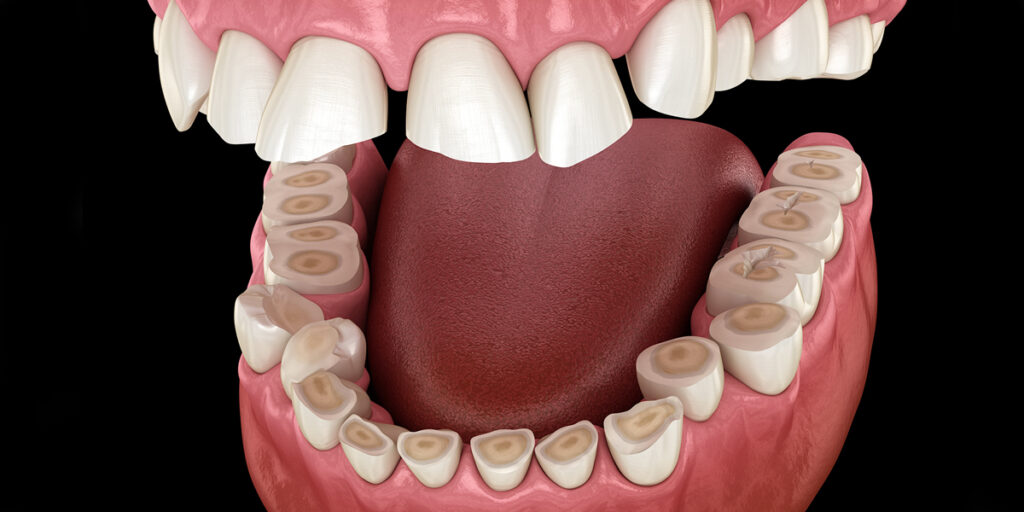
Illustration of bruxism showing teeth grinding and clenching, with worn-down enamel, cracks, and stress on the jaw compared to normal healthy teeth.
Dentists recommend several approaches depending on the severity:
If left unmanaged, bruxism can cause:
With nearly one in four people worldwide affected, bruxism is a condition that should never be ignored. Regular dental visits, early diagnosis, and treatments like night guards can protect your teeth, relieve jaw pain, and improve your overall quality of life.

 Lombard Dental Studio is a full-service dentistry offering a comprehensive range of restorative & cosmetic services. Led by trusted Thousand Oaks dentist Vadim Lebovich DDS, our office is here to take care of your smile.Book Appointment805-495-2431

New to Lombard Dental Studio? Start with a complete exam, digital X-rays, and an oral cancer screening for $59 - the full picture of your oral health, no insurance needed. The easiest way to meet the team and plan your care.